De Haan by Coast Tram
The belle-époque beach village the developers were never allowed to ruin — villas, dunes, and the tram stop Einstein used.
The short version
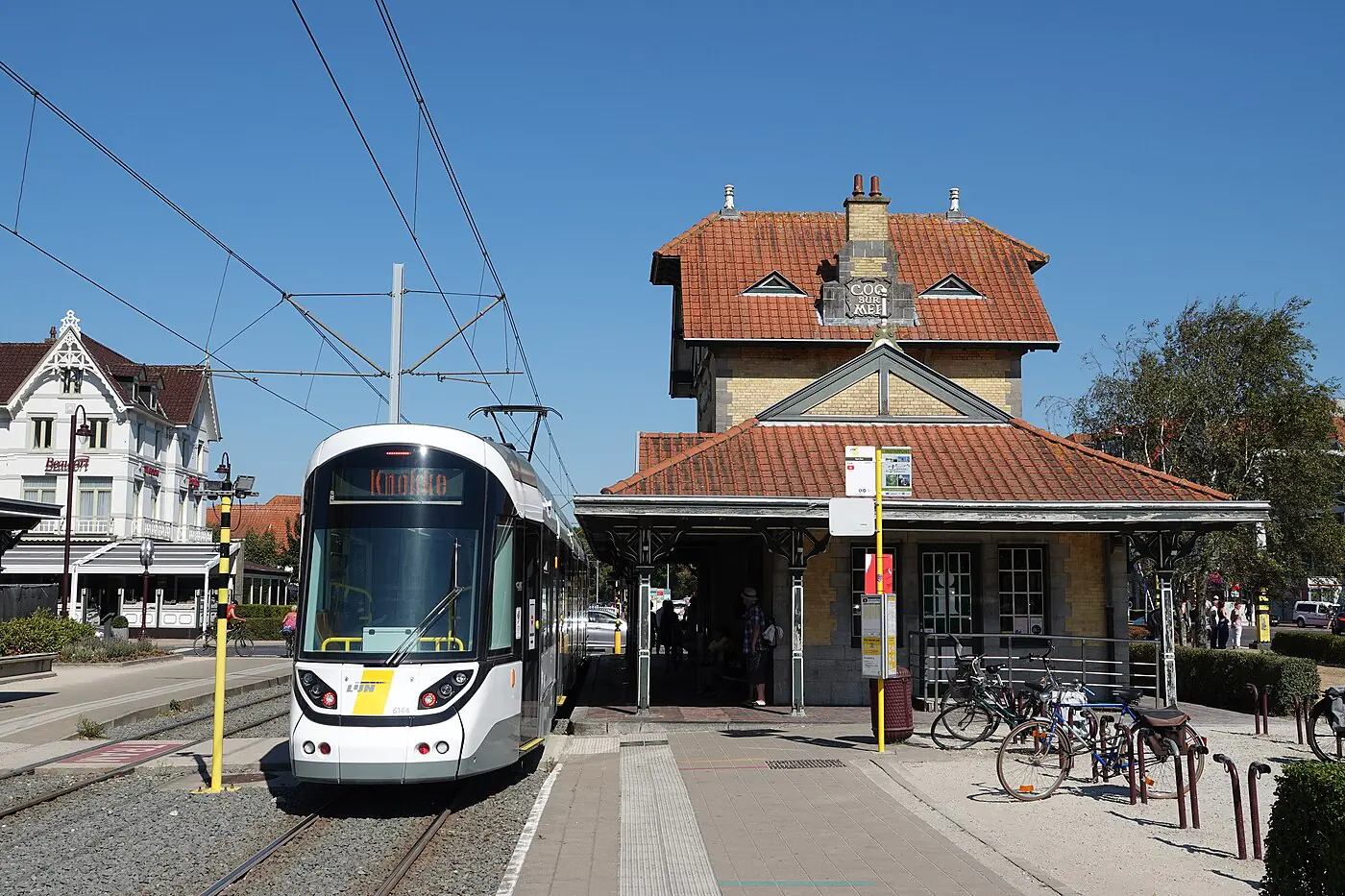
- Take the train to Oostende, then the Kusttram — the coastal tram that runs the whole Belgian shore — about 20 minutes to De Haan aan Zee; tickets and times at delijn.be. The 1902 tram station, all timber and tile, is the prettiest stop on the line and the village’s front door.
- De Haan banned high-rises a century ago and never relented — the “Concessie” quarter keeps its belle-époque villas, crooked lanes, and seafront cottages while the rest of the coast grew apartment walls. The whole ensemble is protected townscape.
- Albert Einstein spent six months here in 1933, newly stateless and guarded day and night after fleeing Germany — the village keeps a bench with his statue and wears the episode with quiet pride.
- The beach runs wide and dune-backed in both directions, with the Concessie’s villas standing where the dunes end — walk west and the crowds thin within ten minutes.
- Rental bikes make the classic afternoon: the dune path toward Wenduine’s Spioenkop lookout one way, flat polder lanes inland the other; village info at visit-dehaan.be.

Getting there
Trains run Bruges to Oostende in about 15 minutes, several an hour. From the station forecourt, the Kusttram toward Knokke reaches De Haan aan Zee in roughly 20 more — the world’s longest tram line doing its best stretch. Step off at the timber station and the Concessie begins immediately; nothing in the village is more than a ten-minute walk. Drivers can come directly in under 40 minutes, but the tram is half the point.
The day
Arrive mid-morning, photograph the tram station before the light flattens, and walk the Concessie’s loops — villa after villa of turrets, verandas, and glazed balconies, with explanatory plaques for the committed. Coffee on the Leopoldplein, then the seafront: promenade one way, dunes the other, beach chairs in season. Lunch on shrimp croquettes where the promenade meets the sand. The afternoon splits by energy — bikes into the dunes toward Wenduine’s lookout, or the Einstein bench and an ice cream and the sort of nothing this village was built for. Tram back to Oostende as the beach empties, train home to Bruges by dinner.
When to go
May through September is the season — beach life, late trams, and the villas in full flower-box dress. June and September give the same light with half the crowd. Winter has its own case: empty sand, grey-gold dunes, and hot chocolate among villas built for exactly this weather. The tram runs year-round regardless.
Frequently Asked Questions
How do you get from Bruges to De Haan?
Train to Oostende (about 15 minutes), then the Kusttram toward Knokke for roughly 20 more to De Haan aan Zee. One ticket covers De Lijn’s tram; the whole trip runs about an hour door to sand.
Why does De Haan look so different from the rest of the coast?
A century-old building code: no high-rises, ever. While the coast grew its apartment wall, De Haan kept its belle-époque villas and dune skyline — the quarter is protected as a whole.
What is the Einstein story?
He fled Germany in 1933, surrendered his passport, and spent six months in a De Haan villa under guard while deciding where in the world to go — one of the strangest chapters of the century, spent on this beach. The village keeps a statue on a bench.
Is the beach good for swimming?
Wide, sandy, and lifeguarded in season, with gentle North Sea surf — which means bracing water in the warmest months and paddling weather the rest. The dunes and promenade carry the day either way.
Is half a day enough?
The village core and beach fit in an afternoon, which is why it pairs well with Oostende’s museums or a Kusttram hop to Wenduine. A full slow day is the better version in summer.